
The best wildlife encounter I've had in years lasted about ninety seconds. A fox crossed the path ahead of me, stopped to look at something in the grass, and moved on. I hadn't crept after it or hidden behind anything. I was simply standing still, downwind, and quiet.
That is more or less the whole trick. Wildlife watching isn't about expensive gear or secret locations. It's about being the least interesting thing in the landscape. Animals are alert to movement, noise and scent. Take those three out of the equation and you become part of the background — and the background is where the good stuff happens.
What follows is a beginner's guide to doing that well: what to carry, how to use binoculars without fighting them, and how to get close enough to watch properly without pushing animals away from feeding, resting or nesting.
Before you leave the house
Small choices make a surprising difference. Wear muted colours — greens, browns, greys — and soft-soled boots. If your waterproof jacket crinkles like a crisp packet every time you lift an arm, that sound carries a long way on a still morning.
Timing matters more than anything else you'll read here. The first hour after sunrise and the last hour before dark are when most birds and mammals are active. Midday is quiet, and in summer it's hot. If you only have one free hour, take the early one.
Leave the dog at home, or keep it on a lead on permitted paths. A dog will empty a field of deer before you've seen a single one. Go easy on scented products too — insect repellent and sunscreen are sometimes genuinely necessary, but strong perfume or aftershave travels ahead of you like a announcement.
Binoculars: the basics that actually matter
You'll see numbers like 8x42 or 10x42. The first figure is magnification, the second is the diameter of the front lens in millimetres. Higher magnification sounds better but is harder to hold steady and gives you a narrower view, which makes finding a moving bird harder. An 8x pair is a sensible starting point for woodland and hedgerows; 10x suits open country and coast.
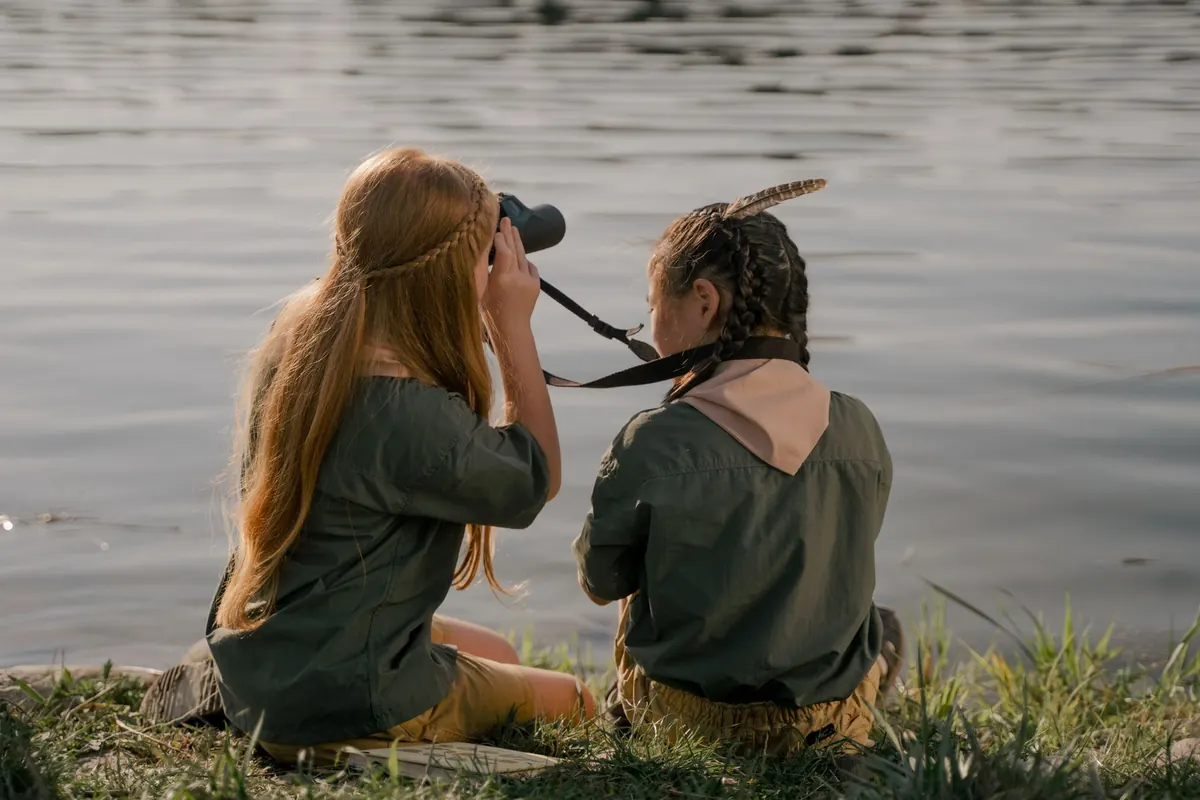
Most beginners struggle not with the optics but with the technique. Work through this and it gets much easier:
- Find the animal with your naked eye first. Don't scan the whole landscape through the lenses.
- Keep both eyes open as you raise the binoculars to your face. It sounds wrong; it keeps you on target.
- Bring them up without moving your head, and press the eyecups gently against your brow.
- Focus with one eye, then adjust the other eyepiece until both sides are sharp.
- Rest your elbows against your ribs, or lean on a gatepost. Breathe out slowly and pause before you look.
If you lose the bird every time you lift the binoculars, you're almost certainly panning too fast. Slow down, and point your body at the tree before you point the glass at the branch. Keep the strap around your neck, and wipe lenses with a proper cloth rather than your sleeve.
Distance is a courtesy, not a compromise
There's a simple test that works for almost everything: if an animal changes what it's doing because of you, you're too close. Back off a few steps. Then a few more.
A bird that stops feeding to stare at you, a deer that lifts its head and stamps a hoof, a seal that slides off a rock into the water — those are signals, not invitations. Give them room and they'll often settle back within a minute or two, which means you get the better view in the end.
Stay on paths and use gates. Don't cut across crops or walk along the muddy edge of a pond, where you'll crush the very cover small animals rely on. And never approach nests, dens, burrows or young animals on their own. A fawn lying in long grass has not been abandoned; its mother is nearby and will return once you've moved on. A fledgling on the ground is usually being fed by its parents. Leave both alone.
Quiet and still: the two skills nobody teaches
Silence isn't just not talking. It's foot placement, clothing and patience. Step heel-first on gravel so you roll rather than crunch. Walk a few paces, stop, and listen for thirty seconds before moving again.
Standing still is a skill you have to practise. Animals pick up movement far more readily than shape, which is why a person who freezes is often ignored while a person who shifts their weight is spotted instantly. If you do need to move, move when the animal is moving — while a deer grazes with its head down, while wind shakes the branches around you.
And watch the wind. Scent travels. Approach into the wind or across it, never with it at your back.
Fieldcraft: let the animals come to you
Chasing rarely works. Positioning does.
- Work the edges. Where two habitats meet — hedgerow and field, water and bank, woodland and clearing — you get two sets of species in one place.
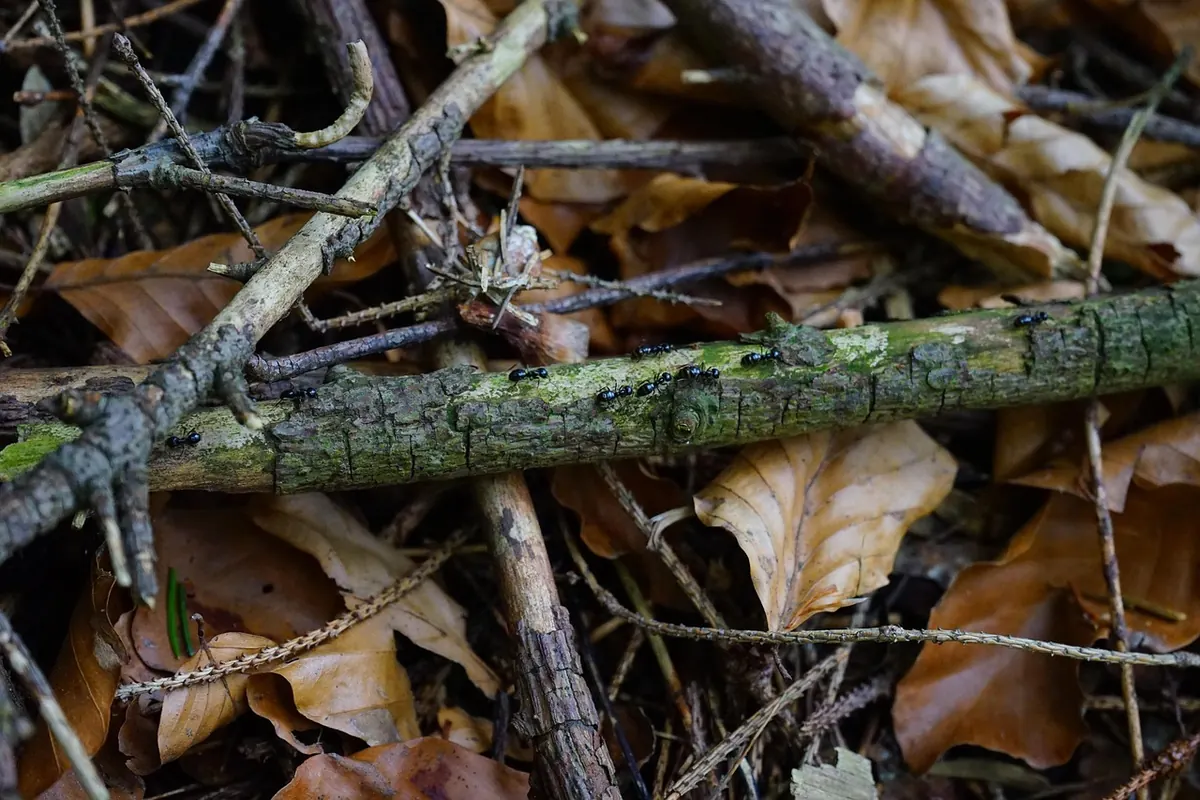
- Read the sign. Droppings, feathers, nibbled cones, tracks in mud, holes drilled in tree trunks. These tell you what's here and where to sit tomorrow.
- Sit and wait. Find a comfortable spot with good cover and give it a full twenty minutes of nothing happening. Most of the interesting things occur in the second twenty.
- Use cover properly. Stand behind a bush or trunk rather than beside it, and keep your outline broken up.
- Learn calls at home. Playing recorded calls in the field to draw birds in costs them energy and can pull them away from nests, so keep the app for your kitchen table.
- Keep notes. Date, weather, species, behaviour. After a few months you'll start to see patterns nobody could have told you about.
Reading the reaction, and knowing when to stop
Alarm looks similar across species: freezing then bolting, a blackbird's sharp repeated tick, a robin's scolding, tail flicking, a stamped foot, a head snapped up and fixed on you. One of those might be coincidence. Two or more together mean it's time to withdraw slowly and quietly.
A few hard rules are worth holding onto. Don't use flash on nocturnal animals — a badger or owl blinded in the dark will abandon what it was doing. Don't feed wildlife; bread, seeds and human food cause real problems and pull animals towards roads and people. Respect temporary closures, which often protect breeding or hibernating species. Check the rules for the site you're visiting, as nature reserves vary and some ground is private or protected.
Your first hour out
Pick one small place you can return to easily — a park pond, a hedgerow path, a stretch of riverbank. Go early, walk slowly to a single good spot, and sit there for twenty minutes with your binoculars. Work along the edges, note three things you saw and one question you couldn't answer, then go home. Repeat it weekly.
You will learn more from one place across a season than from ten new places in a month, because familiarity is what turns a walk into watching. Distance, quiet, patience, no interference. The wildlife doesn't owe you a sighting, and that is part of what makes one worth having.
Photo: cottonbro studio / Pexels
Related posts
More stories you’ll love reading