
Most people meet Leave No Trace through somebody else's mess. A fire ring packed with foil at a beauty spot, a dog bag hanging from a branch like a small grey flag, a banana skin dropped on a mountain path with the confident reasoning that it will rot. Individually these things feel tiny. Across a few thousand visits to the same car park, beach or hilltop, they add up.
The seven Leave No Trace principles are the accepted way of thinking about all this. They need no special kit and no training course. Mostly they ask you to notice the place you are standing in and to leave it much as you found it. Here is what each one means when you are out for a two-hour walk, a riverside picnic, or a long day with children who would rather be climbing something.
Plan ahead, even for a short walk
Planning is the least romantic principle and the one that prevents most of the mess. Ten minutes at home does more than any amount of good intentions in the car park.
Check the forecast and the sunset time. A walk that finishes in the dark usually finishes with a shortcut across a fragile bit of ground. Check whether the place allows dogs, fires or overnight stops, because these rules vary by landowner and season, and the entrance notice board or the land manager's website is where to look.
Then deal with the packaging. Decant snacks before you leave: sandwiches in a box, nuts in a tub, fruit stripped of its plastic. Wrappers opened on a windy hilltop have a habit of disappearing over the next ridge, and nobody chases them. Tell someone your route, and take one refillable bottle each rather than four half-drunk ones.
Walk on ground that can take it
Paths exist because the ground around them is easily damaged. When you step around a puddle onto the verge, you start a second path, and enough people doing it turns a narrow trail into a wide scar of bare mud. If the path is muddy, walk through the mud. Wear boots you do not mind cleaning and accept the wet trousers.
Durable surfaces include rock, gravel, sand, dry grass and snow. Fragile ones include moss, lichen, heather, sand dunes, bog and wet meadow. For a picnic, that means spreading the blanket on dry grass, a flat rock or a sandy patch rather than settling into the bluebells because the light is lovely. At a lake or reservoir, use a spot that has clearly been used before. Repeated use of the same few places is far kinder than everyone finding their own private view.
Take everything home, including the bits you would rather forget
Food waste is rubbish. Orange peel, apple cores, banana skins and crusts take far longer to break down than most people assume, they are not native to the place you dropped them, and they draw animals towards roads and car parks.
Those are the obvious items. The quiet ones matter just as much:
- Dog bags, carried to a bin rather than hung in a hedge for later
- Crumbs and dropped sandwich fillings, which attract gulls and rodents
- Hairbands, plasters, balloon fragments and the little plastic tags from new gloves
- Fishing line, which tangles birds and other wildlife
- Fruit stones and nut shells, which are still litter even though they were once part of a plant
A spare carrier bag rolled into a pocket solves nearly all of it. If there are no toilets, go well away from paths, pitches and water, dig a small hole about 15 to 20 centimetres deep, and carry the paper out with you.
Leave what you find
Stones, shells, antlers, fossils, flowers and fallen wood all belong where they are. They are part of a habitat, and turning over a log or shifting a boulder disturbs everything living underneath it. Carved initials and stacked cairns have the same problem: a new cairn can send the next walker the wrong way, and a carved name lasts longer than the affection that prompted it.
Children find this rule hardest, so give them something to do instead. A camera, a sketchbook or a "find it, don't take it" list turns collecting into noticing. Damming a stream, building a den that strips live branches, or pocketing shells from a protected beach all count as taking, even when nothing leaves the site in a bag.
Fires, wildlife and other people
Keep any fire small, or skip it
Check that fires are allowed first, and use an existing ring rather than building a new one. Keep it small, burn only dead wood gathered from the ground, and never cut from a standing tree. When you finish, drown the fire with water, stir the ashes, and check with the back of your hand that it is cold. A camping stove cooks a meal with none of this fuss, which is why it is the easier choice on most day trips.
Give animals room
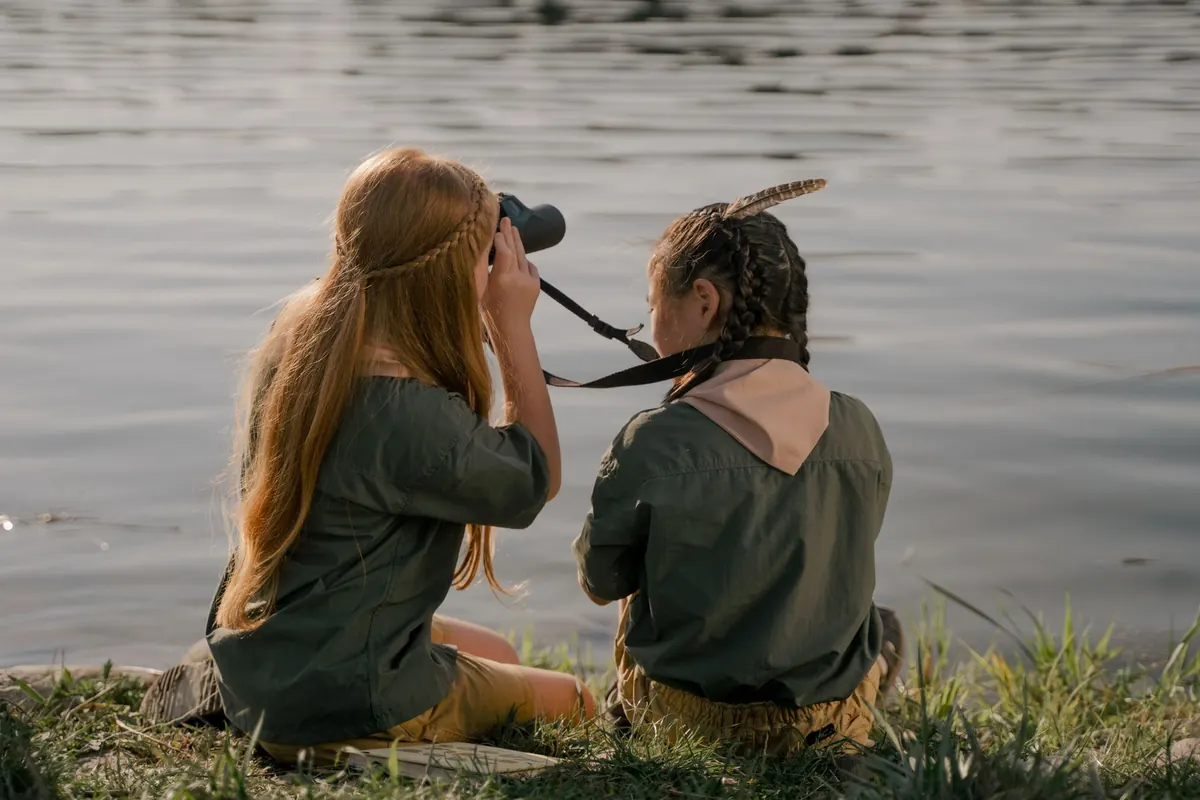
Watch wildlife from a distance, with binoculars rather than a phone held out at arm's length. Do not feed anything, including ducks and squirrels; bread and human snacks do them no favours. Store food so it is not an invitation, keep dogs under control around livestock and nesting birds, and follow whatever local signs say about leads. Close gates behind you, even the ones that were open.
Share the space
Step to the downhill side when you meet horses, and say something calm so the rider knows you are there. Let faster walkers past. Leave the speaker at home. Park so that gates, passing places and emergency access are clear, and keep voices low enough that the person fifty metres away can still hear the birds.
What it looks like with children in tow
Give each child their own small bag for their own rubbish. It sounds trivial, and it works, because ownership changes the whole tone of a walk. Make the last five minutes a "look back" check, where everyone scans the picnic spot for anything left behind. Let them be the ones to spot the path when a shortcut looks tempting.
Do not aim for perfection. A dropped raisin or a forgotten apple core is not a catastrophe. The habit you are building is the point, and it lasts longer than any single outing.
A five-minute check before you go
- Look back at where you sat, stood or pitched. Anything there that was not there before?
- Count the bags: rubbish, dog waste, spare.
- Check pockets for wrappers, tissues and hairbands.
- Make sure any fire is cold and scattered.
- Ask whether the path, the gate and the wildlife are exactly as you found them.
That is the whole idea. Leave No Trace is not a badge or a lecture, just a set of small decisions made early, in the car park and at home, so that the places worth walking to are still worth walking to next year.
Photo: Hans / Pixabay
Related posts
More stories you’ll love reading